John Wilsey
Professor of Church History and Philosophy, Southern Baptist Theological Seminary
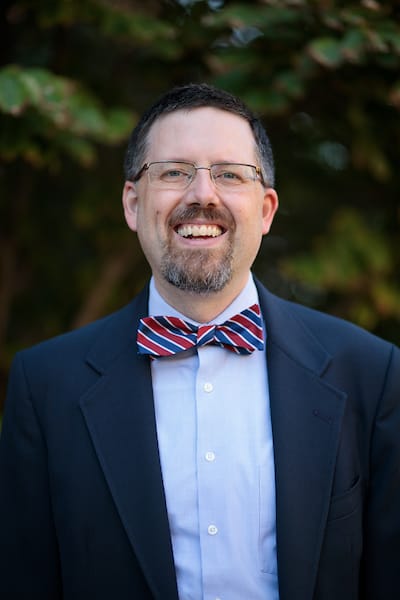
John D. Wilsey, Ph.D. is Professor of Church History and Philosophy at The Southern Baptist Theological Seminary in Louisville, Kentucky, where he has taught for eight years. He is also Chair of its Department of Church History and Historical Theology. He has taught the Bible, American history, and Western thought since 1992 at every level, from elementary grades to PhD. He is the author of five books with a sixth forthcoming in February 2026 on Christianity and American history.
Talks and Topics
The Necessity of Religion to Liberty
Alexis de Tocqueville observed that Americans were able to maintain the harmony between religion and liberty in contrast to his countrymen in France, where religion and liberty were at odds. Religion, particularly Christianity, is necessary to maintain a free society. Tocqueville recognized this, as did our Founding Fathers. Maintaining this harmony is one of the greatest and most significant ways we can steward American tradition for the benefit of new generations so they can see a healthy and strong America at 350.
Is America Still Exceptional?
Because America was founded on transcendent principles and ideals, our nation is unlike any other in the world. To be a Frenchman, one must have been born in France. But to become an American only requires that one subscribe to the ideals expressed in the founding documents. Still, American exceptionalism has fallen on hard times in our day. Some are cynical and skeptical about the idea; others take it too far, considering America as a messianic nation. How might we embrace a balanced, historically informed, and biblically faithful American exceptionalism?
Christianity, History, and a Well-Ordered Patriotism
Love of country is rooted in gratitude to God for the blessing of belonging to a place and to a people. A well-ordered patriotism is necessary for good citizenship, and virtuous historical thinking is necessary to cultivate a healthy love for country. There is no conflict between being a Christian—a citizen of heaven—and being an American patriot. Citizenship in heaven and citizenship in America are both understood in historical terms. One of the ways we employ faithful historical thinking as we cultivate a rightly-ordered patriotism is to exercise the theological (faith, hope, and love) and the classical (wisdom, courage, justice, and temperance) virtues.
The Dead, the Living, and the Yet to be Born: Tradition and American Nationality
What is the role of tradition in the preservation of American society? Edmund Burke famously argued that society is not composed of only the living, but is a contract between the dead, the living, and the yet to be born. We have received American traditions from those who went before us and who are now dead. We will hand down those traditions to our children and grandchildren, and it will be their responsibility to steward them for their descendants when we are dead. What is tradition, and how do we revere tradition without becoming slaves to tradition? And how does gratitude help us receive tradition in healthy and critical ways?
Conservatism and America’s 250th Birthday
Why do conservatives have a particular interest in the 250th birthday of the United States? The word “conservative” has become associated with politics to an inordinate degree over the past twenty years or so. But what else is there to being a conservative besides who one votes for? Conservatism is a disposition, that is, a way of interpreting the world around us. And conservatism is aspirational in that it seeks out the flourishing of human societies, beginning with the family and culminating with the nation. Since our national founding, Americans have been an aspirational people, determined to conserve and properly steward the blessings of American tradition. Conservatives are in the best position to steward American tradition because conservatives intentionally and carefully conserve.