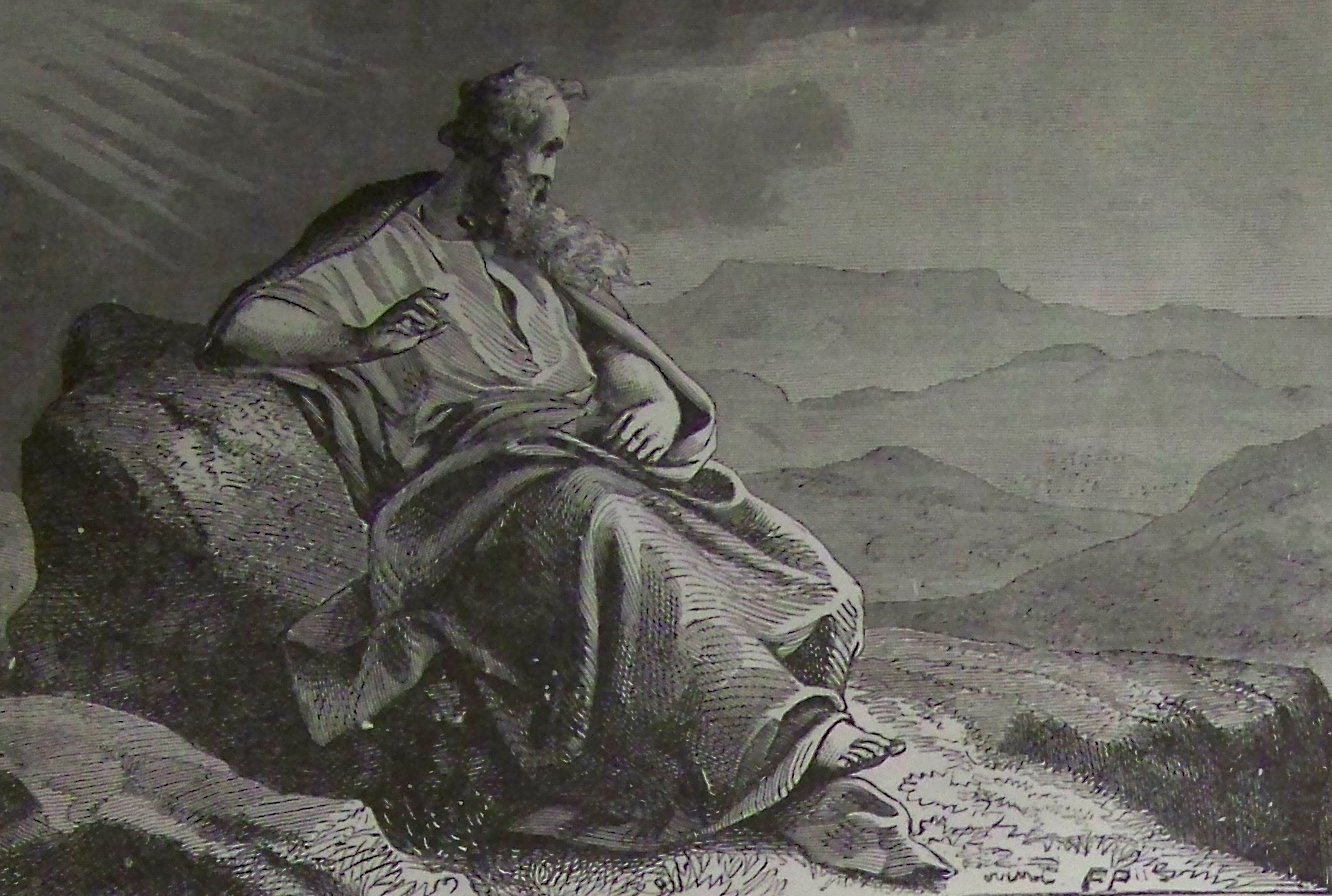

While Presidents’ Day officially celebrates George Washington’s birthday, it’s the perfect occasion to note the impact on the American story of another seminal figure—Moses, who has served as an inspiration to Commanders in Chief since our country’s earliest days.
The Founders and the Exodus from England
On May 17, 1776, on which the Continental Congress held a “day of Humiliation, Fasting and Prayer” to elicit God’s assistance in the Revolution, John Adams wrote to his beloved wife Abigail. He recounted that he had heard a sermon featuring “a Parallel between the Case of Israel and that of America, and between the Conduct of Pharaoh and that of George.” The sermon had “concluded that the Course of Events, indicated strongly the Design of Providence that We should be separated [sic] from G. Britain.” Such an exodus would need someone to lead it, of course, and Adams ruminated:
“Is it not a Saying of Moses, who am I, that I should go in and out before this great People? [Exodus 3:11, but see 2 Chronicles 1:10] When I consider the great Events which are passed, and those greater which are rapidly advancing, and that I may have been instrumental of touching some Springs, and turning some small Wheels, which have had and will have such Effects, I feel an Awe upon my Mind, which is not easily described.”
While Adams would eventually serve as America’s second president, it was the first, Washington, who emerged as most Moses-like. New Hampshire’s Peter Folsom summed up the sentiment of the times by noting how “Moses led the Israelites through the red sea; has not Washington conducted the Americans thro’ seas of blood?” Massachusetts pastor Eli Forbes saw Washington as an even greater figure than his predecessor, since Moses had died on the precipice of the Promised Land while Washington had seen his mission through to its end. Forbes suggested that Moses was actually “the Washington of Israel.”